

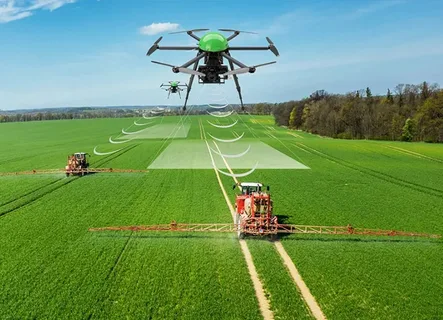
In the face of climate change and increasing global food demand, sustainable farming practices have become more crucial than ever. Among the various innovations transforming agriculture, Climate-Smart Farming: Precision Agriculture as a Tool for Sustainability stands out as a promising approach to address environmental challenges while boosting productivity.
What is Climate-Smart Farming?
Climate-smart farming integrates agricultural techniques that enhance productivity, increase resilience to climate change, and reduce greenhouse gas emissions. It involves adaptive strategies that enable farmers to respond effectively to shifting weather patterns and resource limitations.
Precision Agriculture: The Core of Climate-Smart Farming
At the heart of climate-smart farming lies precision agriculture — a data-driven approach that uses technology to optimize the management of crops and resources. Precision agriculture leverages GPS, sensors, drones, and data analytics to monitor soil conditions, crop health, and water usage with remarkable accuracy.
By applying inputs such as fertilizers and water only where and when they are needed, precision agriculture minimizes waste and environmental impact. This not only improves yield but also conserves vital resources, making it a key component of climate-smart farming.
Benefits of Climate-Smart Farming: Precision Agriculture as a Tool for Sustainability
- Enhanced Resource Efficiency
Precision agriculture helps farmers use water, fertilizers, and pesticides more efficiently. This reduces runoff, lowers energy consumption, and decreases pollution, contributing to a healthier ecosystem. - Increased Crop Resilience
With real-time data and predictive analytics, farmers can anticipate and manage risks related to pests, diseases, and extreme weather, thus building resilience against climate variability. - Reduced Greenhouse Gas Emissions
By optimizing input use and improving soil management practices, climate-smart farming through precision agriculture reduces carbon footprints, promoting environmental sustainability. - Economic Viability
While initially requiring investment, precision agriculture ultimately lowers input costs and increases crop yields, enhancing profitability for farmers in the long run.
Challenges and Future Directions
Despite its benefits, adoption of climate-smart farming practices like precision agriculture faces hurdles such as high costs, limited technical expertise, and inadequate infrastructure in developing regions. Addressing these challenges through policy support, education, and technological innovation will be essential for widespread implementation.
Conclusion
As global agriculture strives to become more sustainable, Climate-Smart Farming: Precision Agriculture as a Tool for Sustainability offers a powerful solution. By combining technology with smart practices, it paves the way for resilient, efficient, and eco-friendly farming systems that can secure food production for future generations.
