

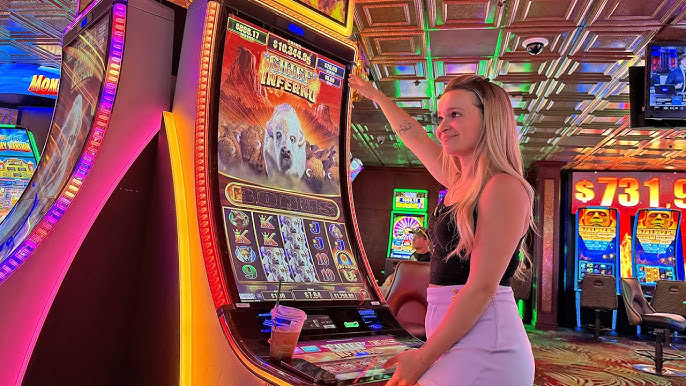
Casino games are designed to be visually and audibly engaging. Bright colors, animated symbols, celebratory sounds, music, flashing effects, and carefully timed notifications can turn a simple game into an immersive entertainment experience.
These elements are not merely decorative. Game designers use principles from psychology, behavioral science, and user-interface design to influence attention and create emotional responses. Understanding these techniques can help players recognize how casino environments are designed and make more conscious decisions about their casino online malaysia.
Why Sound Matters in Casino Games
Sound is one of the most powerful elements in digital game design because it can communicate information almost instantly.
A casino game may use different sounds for spinning reels, winning combinations, bonus triggers, jackpots, and other events.
These audio cues help players understand what is happening without requiring them to read text or closely inspect the screen.
The Psychology of Winning Sounds
Winning sounds are often deliberately energetic and memorable.
A short sequence of tones may accompany even a relatively small payout, creating a sense of achievement.
In some games, the audio can become more dramatic as the value of a win increases.
This combination of sound and visual animation can make winning moments feel particularly significant.
Importantly, a celebratory sound does not necessarily mean the player has made a net profit. A player might receive a payout that is smaller than the original wager while still hearing a positive-sounding celebration.
Music and Emotional Atmosphere
Background music helps establish a game’s atmosphere.
A futuristic slot might use electronic sounds, while an adventure-themed game could feature orchestral music or dramatic effects.
Music can also change during bonus rounds or major events.
These changes create transitions between ordinary gameplay and more exciting moments.
The Role of Repetition
Casino games often repeat certain sounds throughout a session.
Repetition helps players become familiar with the interface and makes particular events instantly recognizable.
Over time, specific sounds can become associated with anticipation, excitement, or reward.
This is one reason audio design is treated as an important part of modern casino game development.
Visual Design and Attention
Visual elements are equally important.
Bright colors, animated symbols, moving backgrounds, glowing buttons, and large win displays can attract attention and guide the player’s eyes toward particular areas of the interface.
Important actions, such as spin or bet controls, are usually made highly visible.
The objective is to create an interface that is easy to understand while maintaining visual excitement.
Colors and Emotional Associations
Colors can influence how people perceive digital interfaces.
Red may be associated with excitement or urgency, while gold can suggest luxury, rewards, or value.
Green may communicate money, nature, or success depending on the theme.
Game developers can use color combinations to reinforce a particular atmosphere.
However, individual reactions to colors vary according to culture, personal experience, and context.
Animation and Movement
Movement naturally attracts human attention.
Animated reels, expanding symbols, cascading tiles, and flashing notifications can make a game feel more dynamic than a static interface.
Animations can also create anticipation by delaying the final presentation of an outcome for a short period.
This visual pacing contributes to the overall emotional experience.
Near-Miss Visuals
Some games can display outcomes that appear close to triggering a feature or winning combination.
For example, a bonus symbol might appear prominently during a spin but fail to complete the required combination.
These outcomes are sometimes described as near misses.
Players should remember that a near miss does not mean the game was actually close to producing a winning outcome in a way that changes future probabilities.
The visual presentation can nevertheless create a strong psychological impression.
Celebration Effects
Modern slots may use fireworks, flashing lights, coin animations, sound effects, and large numerical displays when a payout occurs.
These features emphasize the moment and can make a win feel more dramatic.
The same design principles appear in many other forms of digital entertainment, including mobile games and video games.
Reward Anticipation
Anticipation is an important part of casino design.
A game may gradually increase music intensity, animate symbols, or use countdown effects before revealing an outcome.
The suspense can make the result feel more exciting than simply displaying the final number immediately.
This is an example of how presentation can influence emotional responses even though it does not change the underlying mathematical outcome.
Losses Presented as Wins
One particularly interesting design feature occurs when a game celebrates a payout that is technically smaller than the player’s original stake.
For example, a player could wager $10 and receive a $6 payout.
The game may still use celebratory sounds and animations because the result technically produced a winning combination.
From a financial perspective, however, the player has lost $4 on that spin.
Understanding this distinction can help players evaluate results more realistically.
Sound and Visuals on Mobile Devices
Mobile casino games often require particularly careful design because smartphone screens are smaller and players may use headphones or speakers.
Buttons must remain easy to identify, while animations need to work smoothly on different screen sizes.
Vibration and other device features may also be incorporated into some gaming experiences.
These technologies can make games feel more immersive.
Gamification Techniques
Casino designers increasingly borrow concepts from video games.
Levels, achievements, missions, progress bars, collectibles, tournaments, and reward meters can encourage continued interaction.
These systems can make gambling feel more like a broader entertainment experience.
Players should recognize that gamified features are designed to increase engagement and should set personal limits before beginning.
Does Design Change the Odds?
The visual and audio presentation of a casino game does not necessarily change its mathematical probabilities.
A dramatic animation does not make a jackpot more likely.
A particular sound does not indicate that a winning combination is about to appear.
The underlying game mechanics and randomization system determine the actual outcome.
Managing Psychological Influences
Awareness is one of the most useful tools available to players.
Taking regular breaks, setting time and spending limits, and avoiding impulsive decisions can help maintain control.
Players should focus on their actual balance and spending rather than allowing celebratory graphics or sounds to determine how successful a session feels.
Designing for Responsible Gambling
Modern casino design can also incorporate responsible gambling features.
Session reminders, deposit limits, spending notifications, cooling-off periods, and self-exclusion tools can provide important safeguards.
These features demonstrate that behavioral design does not have to be used exclusively to increase engagement. It can also support safer gambling practices.
Conclusion
Casino sound effects and visual design are carefully developed components of the gambling experience. Winning sounds, colorful animations, dramatic music, flashing graphics, and celebratory effects can capture attention and create emotional associations with particular outcomes. These techniques can make games more immersive, but they do not change the mathematical odds of winning. Understanding the psychological principles behind casino design allows players to separate entertainment value from financial results. By recognizing how sound, movement, color, anticipation, and gamification influence perception, players can make more conscious decisions and maintain realistic expectations. Ultimately, the most important measure of a gambling session is not how exciting the graphics or sounds feel, but how the activity fits within a player’s predetermined time and financial limits.
